
Call for Chapters | Indigenous Economies: Decolonial Perspectives on Economy, Ecology, and Justice
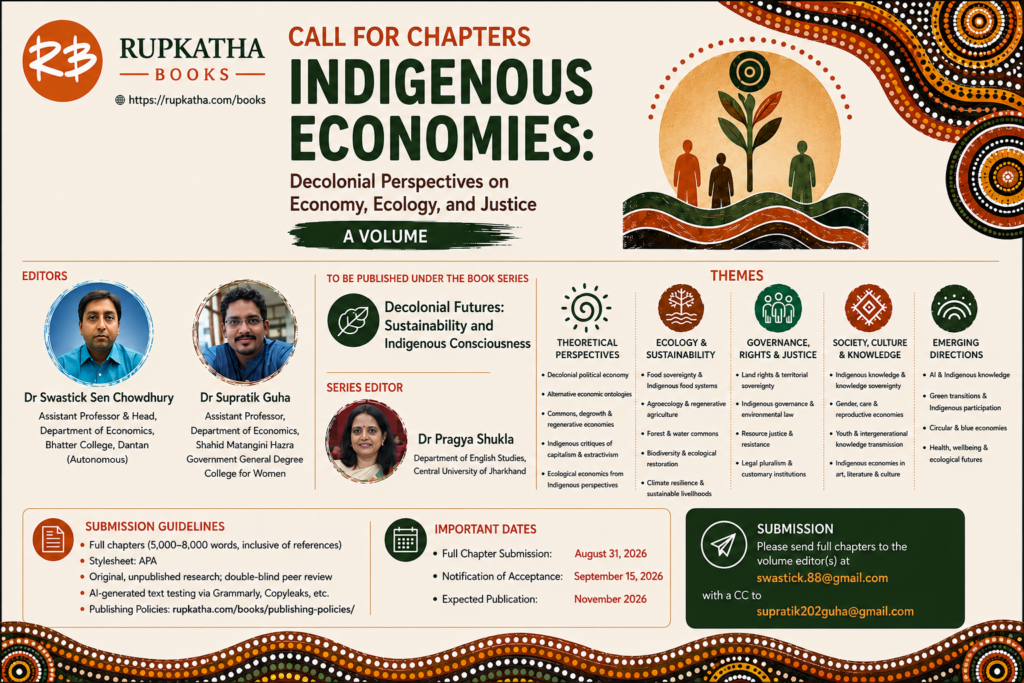
A Volume
Editors
Dr Swastick Sen Chowdhury
Assistant Professor & Head in the Department of Economics, Bhatter College, Dantan (Autonomous)
Dr Supratik Guha
Assistant Professor, Department of Economics at Shahid Matangini Hazra Government General Degree College for Women
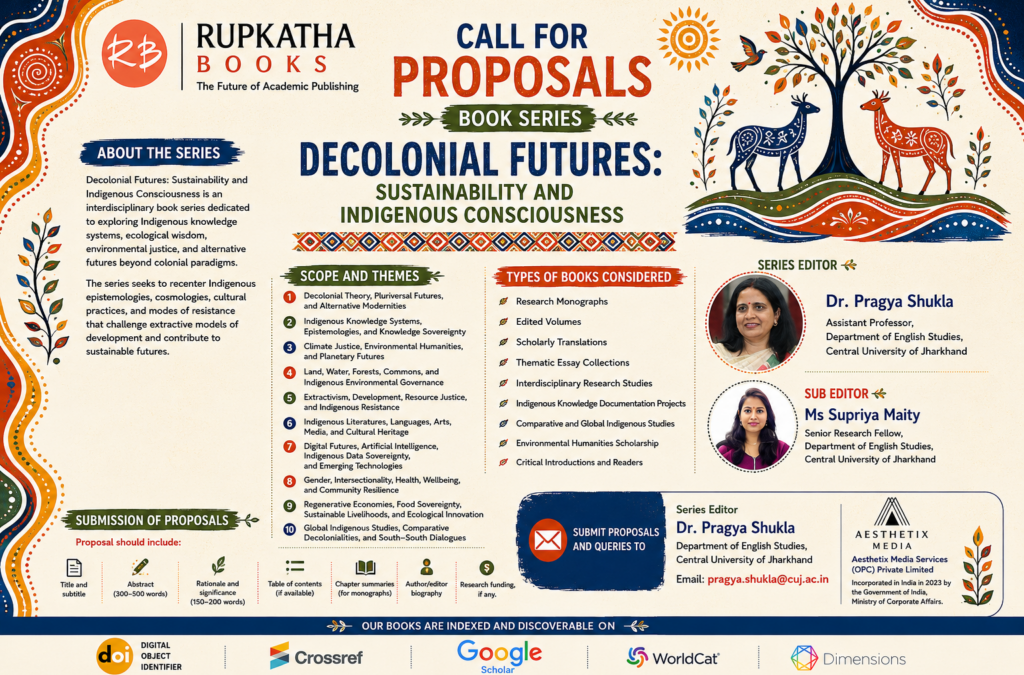
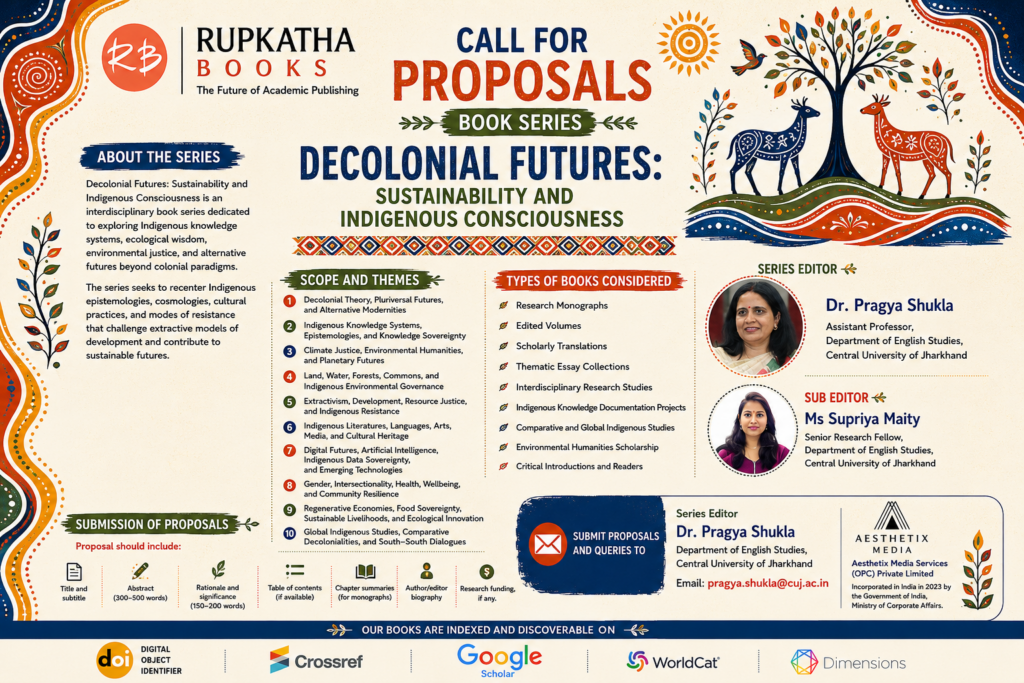
To be published under the book series
Decolonial Futures: Sustainability and Indigenous Consciousness
About the Volume
The twenty-first century is witnessing profound crises of economy, ecology, and democracy. Climate change, biodiversity loss, extractivism, food insecurity, forced displacement, and widening social inequalities have exposed the limitations of dominant economic paradigms rooted in colonialism, capitalism, and endless growth. These interconnected crises call not merely for policy reform but for a fundamental rethinking of how economies are imagined, organised, and sustained.
In recent decades, scholars have increasingly turned towards concepts such as the pluriverse, Buen Vivir, Ubuntu, the commons, degrowth, regeneration, political ontology, and relationality to imagine alternatives to Eurocentric models of development. Indigenous knowledge systems have become central to these conversations, offering sophisticated understandings of reciprocity, collective stewardship, ecological interdependence, and community well-being. Rather than treating nature as a resource to be exploited, Indigenous worldviews conceive land, forests, rivers, animals, and human communities as interconnected participants in living ecological relationships.
This volume proposes Indigenous economies as a critical theoretical framework for understanding these alternative modes of existence. Indigenous economies are not simply subsistence systems or local adaptations; they represent complex social, cultural, ecological, ethical, and political formations that challenge extractive capitalism and colonial modernity. They foreground collective responsibility over individual accumulation, regeneration over extraction, and relationality over commodification.
Bringing together scholars from across the humanities, social sciences, environmental studies, law, geography, anthropology, economics, political ecology, and Indigenous studies, this volume seeks to examine how Indigenous economic thought contributes to contemporary debates on sustainability, climate justice, ecological restoration, food sovereignty, and decolonial futures.
The editors particularly welcome contributions that develop new theoretical frameworks, critically engage existing paradigms, or provide empirically grounded analyses capable of advancing international debates on decolonial political economy and ecological justice.
Suggested Themes
Contributors may address, but are not limited to, the following themes:
Theoretical Perspectives
- Indigenous economies as decolonial political economy
- The pluriverse and alternative economic ontologies
- Political ontology, relationality, and Indigenous philosophies
- Buen Vivir, Ubuntu, Swaraj, and other non-Western economic imaginaries
- Commons theory and community economies
- Degrowth, post-growth, and regenerative economies
- Indigenous critiques of capitalism, neoliberalism, and extractivism
- Ecological economics from Indigenous perspectives
Ecology and Sustainability
- Food sovereignty and Indigenous food systems
- Agroecology and regenerative agriculture
- Forest economies and community conservation
- Water commons and Indigenous governance
- Biodiversity, biocultural diversity, and ecological restoration
- Climate adaptation and resilience
- Environmental justice and ecological citizenship
- Sustainable livelihoods and local innovations
- Ecology and Nature Based Solutions
Governance, Rights, and Justice
- Land rights and territorial sovereignty
- Indigenous governance and environmental law
- Resource justice and resistance to extractivism
- Community-based natural resource management
- Indigenous movements and environmental activism
- Decolonising development policy
- Legal pluralism and customary institutions
Society, Culture, and Knowledge
- Indigenous knowledge systems and knowledge sovereignty
- Oral traditions and ecological knowledge
- Indigenous entrepreneurship and cooperative economies
- Gender, care, and reproductive economies
- Youth, education, and intergenerational knowledge transmission
- Indigenous data sovereignty and digital futures
- Indigenous economies in literature, film, art, and visual culture
- Comparative Indigenous economies across the Global South
- Indigenous-informed frameworks for restoring environmental and human well-being
Integrating Indigenous Knowledge with Mainstream Health Care Practices
- Co-producing knowledge upholding Indigenous ontologies alongside mainstream tradition
- Tracing the continuum of indigenous healthscapes from ancestral balance, colonial disruption and future reconnection
- Co-designing health structures with indigenous communities
Emerging Directions
- Artificial intelligence and Indigenous knowledge
- Green transitions and Indigenous participation
- Circular and regenerative economic models
- Blue economies and Indigenous coastal communities
- Urban Indigenous economies
- Tourism, heritage, and community development
- Food Security, Health, wellbeing, and ecological futures
Submission Guidelines
- Authors are invited to submit full chapters of 5,000–8,000 words, inclusive of references.
- Stylesheet: APA
- All submissions must present original, unpublished research and will undergo double-blind peer review.
- All submissions will undergo AI-generated text testing through Grammarly, Copyleaks, etc.
- Publishing Policies: https://rupkatha.com/books/publishing-policies/
- Please send full chapters to the volume editor(s) at swastick.88@gmail.com with a CC to supratik202guha@gmail.com
Important Dates
- Full Chapter Submission: August 31 2026
- Notification of Acceptance: September 15 2026
- Expected Publication: November 2026
About the Book Series
Decolonial Futures: Sustainability and Indigenous Consciousness is an interdisciplinary book series published by Rupkatha Books. The series promotes theoretically rigorous and globally engaged scholarship that foregrounds Indigenous epistemologies, ecological wisdom, environmental justice, and decolonial approaches to sustainability. It provides a platform for innovative research exploring plural ways of knowing, being, and inhabiting the world while contributing to contemporary debates on ecological resilience, social justice, and sustainable futures.
Series Editor
Dr Pragya Shukla
Assistant Professor, Department of English Studies, Central University of Jharkhand
General Editor
Dr Tarun Tapas Mukherjee
Associate Professor, PG Department of English, Bhatter College, Dantan (Autonomous), India