2013 - Page 10

Aestheticizing without Agenda: A Counter-Reading of the Western Approach to Chhau Dance

2.3K views

Indranil Acharya, Indranil Acharya, Vidyasagar University, West Bengal, India

 Download PDF Version

The Argument

In an article titled “A Crisis of Culture” published in The Hindu (May 07, 2006), T. M. Krishna observes:

We are in a modern world, don’t we need to modernise everything? What’s modernisation? Have the arts not always moved with the times? Do we sing or dance the way it was done 200 years ago? Don’t we experiment with all our artistic traditions? Don’t we address contemporary issues through dance? Don’t we package our music differently today? (2)1

 The crux of this paper is to raise similar issues with regard to the popular folk dance form of Eastern India- Chhau. The Chhau of Odisha, West Bengal and Jharkhand has been included in the UNESCO list of Intangible Heritage. The western perception on this essentially folk art form has been quite problematic. There is a constant attempt by the western researchers to categorize Chhau as a classical dance form and the ostensible reason behind it has been the royal involvement in terms of performance and choreography particularly in Seraikella and Mayurbhanj. However, the purely folk origin of the Purulia Chhau of West Bengal is left out of the ambit of discussion. But it has not been taken into consideration that after the independence and the abolition of monarchy in various Indian states, this paradigm of nobility controlling the art form of Chhau has been done away with. Instead, various state governments and their agencies have undertaken a string of democratic measures to preserve and promote this rich indigenous art form. This paper attempts to confront and counter the traditional readings of the western scholars with regard to this folk dance form. The recalcitrant approach to search for a “pure” form as Chhau is incorrectly projected as a classical dance form. There is a sardonic reaction at any deviation from the so-called “purity” of form as sheer exhibitionism with regard to the western audience and a downright rejection of political patronage as an ignoble way of promoting tourism industry. Such misconceived criticisms are taken up for discussion in this paper. With first-hand knowledge of the ground reality and close interaction with the folk artistes, the paper aims to correct the western approach to standardize an essentially fluid and vibrant art form that imbibes the best of western influences and blends it impeccably with the indigenous tradition to produce an organic unity of impression. The paper begins with an outline of this dance form. Keep Reading

Modern Rendition of Ancient Arts: Negotiating Values in Traditional Odissi Dance

3K views

Shreelina Ghosh, Dakota State University

 Download PDF Version

Abstract

Recent innovations in remediating performances allow dancers to perform, collaborate, teach, learn and forge new inter-body relationships that substitute the traditional Guru-Shishya or master-disciple relationship. The divide between technologized and traditional practices in dance creates a productive space that can help scholars understand how digital and networked technologies are transforming embodied cultural memory. Tradition-technology encounters and formations of a deviant discourse challenge the dominant (traditional) norms of embodied cultural memory. My qualitative study of the field reveals that innovation has been encouraged by the most members of the dance community. However, if mediated dance compromises values associated with the dance, like its sacredness, the importance of the body, and the importance of the Guru, it can be potentially subversive to the traditional practice. The main points of conflict between traditional dance and technologically mediated practices indicate moments of compromise in the traditional values. Keep Reading

Singing Specters: Phenomenology in the Performance of Music

920 views

Dan W. Lawrence, Michigan Technological University

Download PDF Version

 Abstract

In this article, I write along with key 20th century thinkers—Maurice Merleau-Ponty and Jacques Derrida—to understand how a phenomenological examination of the performance of music can contribute to a meaningful exploration of the roles of consciousness and presence in the process of rhetorical invention. I begin by looking at Plato’s Phaedrus and assess the notion of “fit” as it relates to rhetoric and performance as well as the mythical trope of the cicadas. I will then explore how Plato’s rendering of madness in this piece might help us understand Derrida’s almost paradoxical construction of the voice in Voice and Phenomenon. From here, I move to analyze the figure of the ghost as presented by Derrida and relate this to the non-presence of presence while asking: how might this notion better help us understand how rhetorical decisions are made by performing artists? The argument I put forth is that there is a subtle difference between the aleatoric moments of invention that occur in the process of solitary composition and those that occur on the stage. My conclusion points toward further research that would analyze these elements in recorded music and digital recording technologies which further problematizes the notion of non-presence: what would it really mean to have a ghost in the machine? Do we perform a séance each time we press “play”? Keep Reading

Performing “Fine Arts”: Dance as a Source of Inspiration in Impressionism

6.5K views

Johannis Tsoumas,  Hellenic Open University, Athens

 Download PDF Version

Abstract

The proposed article aims to highlight the importance of the most significant performing art which, according to the author’s opinion, is dance, in influencing one of the most magnificent movements in world art history: Impressionism. Through an diachronic and deep cut in time, namely, the last decades of the nineteenth century France, a period commonly known as fin de siècle, this article attempts to illuminate the unseen sides of this magical “physical ceremony” which was meant to affect dramatically not only art, but also the social status of the country. The process of human movements, especially female ones, through the interaction of body and music was ultimately the cornerstone of the configuration of not only the aesthetics, but the overall ideology of some of the most prominent representatives of Impressionism, but also Post-Impressionism, as in many cases it determined their own lives. The imposing and much debated waltz, the classical ballet as well as the charming can-can and, its ancestor, the playful quadrille, were harmonically blended with the enchanting tools and materials of the Impressionist artists and the result was some of the most astonishing works of art in the world art history. Keep Reading

Was Shakespeare an Existential Wimp?

492 views

Rob Harle, Independent Researcher and Artist, Australia

Download PDF Version

In this paper I discuss the way in which Shakespeare explores the implications of such human traits as lust, greed and envy.  The acts of violence we perpetrate upon ourselves and one another indicate that there may be no guarantees of benevolent human action. I will look at “Measure for Measure” and “The Merchant of Venice”, these two plays seem to me to address the problem of benevolent human action at a more complex level than many of Shakespeare’s other plays. Further, many performance studies address how the audience feels ‘during’ the performance, this essay addresses how the audience feels when ‘leaving’ the theatre. Keep Reading

‘All the world’s a stage and I’m a genius in it’: Creative Benefits of Writers’ Identification with the Figure of Artistic Genius

1.8K views

Claudia Chibici-Revneanu, ENES, UNAM León in Mexico

Download PDF Version

Abstract

This paper focuses on the romantic notion of artistic genius and its operations as a kind of theatrical script functionally guiding many writers’ lives and approaches to their creations. In recent years, the concept has been justly deconstructed as heavily gendered and providing an inadequate representation of actual creative processes. Nevertheless, what these studies of genius have often overlooked are the manifold functions the genius ideology has traditionally fulfilled for artists and society at large. To illustrate this, the article focuses specifically on the complex and often beneficial interaction arising from authors’ self-identification with the genius role and their negotiation of the creative process. A plea will be made for taking seriously the limitations of the genius script while at the same time trying to save-guard its valuable influence on creative writers’ artistic performance. Keep Reading

The Entangled Vocabulary of Performance

2.2K views

Sruti Bala, University of Amsterdam, Netherlands

 Download PDF Version

This article attempts to map the concept of performance, in terms of its genealogy and the diversity of its application. Such a mapping is an unavoidably reductive step, since the productive force of the concept partly relies on the difficulty of pinning it down to a precise typology or set of definitions. The act of mapping out the concept can itself be interpreted as a kind of performance, as has been argued by Richard Schechner (Performance Studies, 40-42), it is not a neutral or interest-free undertaking, and however persuasive the mapping may be, it may not necessarily simplify the application of the concept, nor resolve the disputes around it. As a “keyword” in the sense of Raymond Williams, performance is an operative concept, “whose meanings are inextricably bound up with the problems [they are] being used to discuss” (Keywords, 13). The concept is not merely descriptive, but programmatic, in that the choice and justification of the uses of the term lead to and imply specific effects. German theatre scholar Erika Fischer-Lichte describes the concept in terms of the range of its semantic shades, ‘Begriffsabschattungen’ (Kulturen des Performativen, 9), arguing that these shades need to be seen in relation to each other in order to trace the histories and contexts of the concepts of performance and the performative. Fischer-Lichte derives the semantic shades of the performative with reference to different disciplinary influences and deployments of the term, such as anthropology, linguistics, language philosophy, technology, economics and aesthetics. A typology and historicisation of the concept is a necessary though not entirely sufficient step in understanding its usage. Even if one makes sense of each of the shades of the term, one does not know how to make sense of the entire range of these shades. Keep Reading

5 secrets of a healthy breakfast

131 views

Mavik Banner: physician; scientist. Searching for a way to tap into the hidden strengths that all humans have… then an accidental overdose of gamma radiation alters his body chemistry. And now when David Banner grows angry or outraged, a startling metamorphosis occurs. The creature is driven by rage and pursued by an investigative reporter. The creature is wanted for a murder he didn’t commit. David Banner is believed to be dead, and he must let the world think that he is dead, until he can find a way to control the raging spirit that dwells within him.

What would we do baby, without us?

I bet we been together for a million years, And I bet we’ll be together for a million more. Oh, It’s like I started breathing on the night we kissed, and I can’t remember what I ever did before. What would we do baby, without us? What would we do baby, without us? And there ain’t no nothing we can’t love each other through. What would we do baby, without us? Sha la la la.

Here’s the story of a lovely lady

Here’s the story of a lovely lady, who was bringing up three very lovely girls. All of them had hair of gold, like their mother, the youngest one in curls. Here’s the store, of a man named Brady, who was busy with three boys of his own. They were four men, living all together, yet they were all alone. ‘Til the one day when the lady met this fellow. And they knew it was much more than a hunch, that this group would somehow form a family. That’s the way we all became the Brady Bunch, the Brady Bunch. That’s the way we all became the Brady Bunch. The Brady Bunch!

Who can turn the world on with her smile? Who can take a nothing day, and suddenly make it all seem worthwhile? Well it’s you girl, and you should know it. With each glance and every little movement you show it. Love is all around, no need to waste it. You can have a town, why don’t you take it. You’re gonna make it after all. You’re gonna make it after all.

In time of ancient gods, warlords and kings, a land in turmoil cried out for a hero. She was Xena, a mighty princess forged in the heat of battle. The power. The passion. The danger. Her courage will change the world.

Being evil has a price. I hear a lot of little secrets. Tell me yours, and I’ll keep it. You oughta know my name by now, better think twice. Being evil has a price. I’ve got a nasty reputation. Not a bit of hesitation, you better think twice. ‘Cause being evil has a price.

The time to play the music, it’s time to light the lights. It’s time to meet the Muppets on the Muppet Show tonight! It’s time to put on makeup, it’s time to dress up right. It’s time to raise the curtain on the Muppet Show tonight. Why do we always come here? I guess we’ll never know. It’s like a kind of torture to have to watch the show! And now let’s get things started – why don’t you get things started? It’s time to get things started on the most sensational inspirational celebrational Muppetational… This is what we call the Muppet Show!

Chosen from among all others by the Immortal Elders – Solomon, Hercules, Atlas, Zeus, Achilles, Mercury – Billy Batson and his mentor travel the highways and byways of the land on a never-ending mission: to right wrongs, to develop understanding, and to seek justice for all! In time of dire need, young Billy has been granted the power by the Immortals to summon awesome forces at the utterance of a single word – SHAZAM – a word which transforms him in a flash into the mightiest of mortal beings, Captain Marvel!

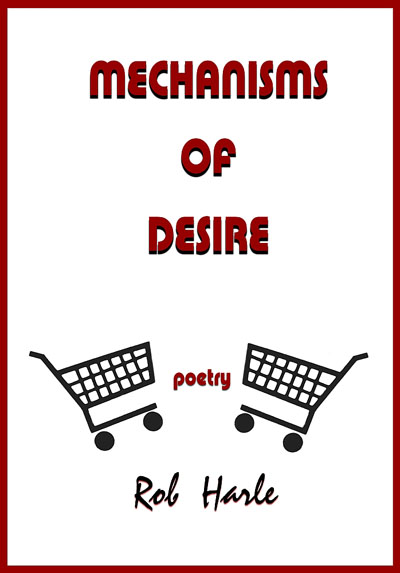
Book Review: Mechanisms of Desire by Rob Harle

406 views

  Mechanisms of Desire by Rob HarlePublisher: Spinning Spider Publications, Australia

Published in 2012

ISBN:978-0-646-57481-3

Price: Not mentioned.


Review by

Tarun Tapas Mukherjee

Bhatter College, Dantan, India

 PDF Version of the review

Evolutionary history of mankind is interrelated with the evolution of technology in a very complex way and so much so that in order to understand patterns of cultures of the distant prehistoric times researchers resort to understanding techno-complex, the archaeological imprint of technology to be found across scattered evidences. Technology, again, creates epochs and can cause massive changes in the ways of life. While people adopt new ways of life with every major technological changes, concerns about the outcome of application of a new technology are also are heard. It was, however, not until the implementation of digital technology in embedded systems serious moral and ethical questions would be raised about using technology in popular media and serious literature. In the present century, with the introduction of embedded systems, many of which function in networked environments, use of technology has increased at unprecedented rate. Even sometimes some gadgets are being treated as an extension of our bodily organs and mental faculties. This sometimes is interpreted as mindless rush for consumerism. On a more serious note, many see the human-machine proximity and even incorporation of digital parts as another stage of evolution, set to bring about unexpected and unpredicted changes. Keep Reading

1 8 9 10 11 12 17