by Editor | Sep 25, 2025 | Translation, Uncategorized
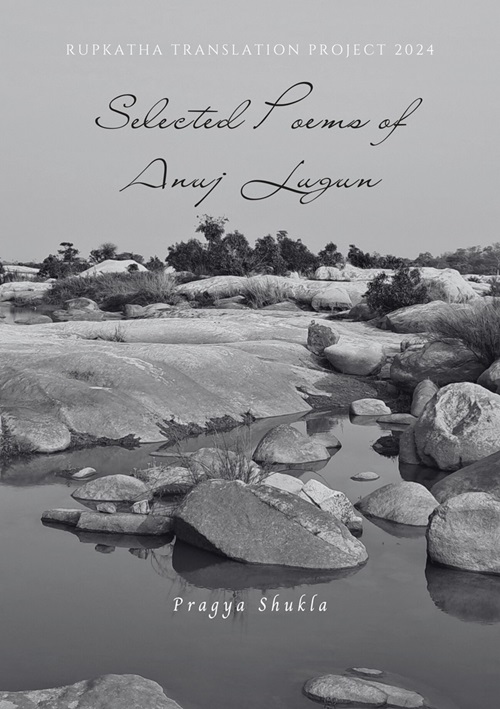
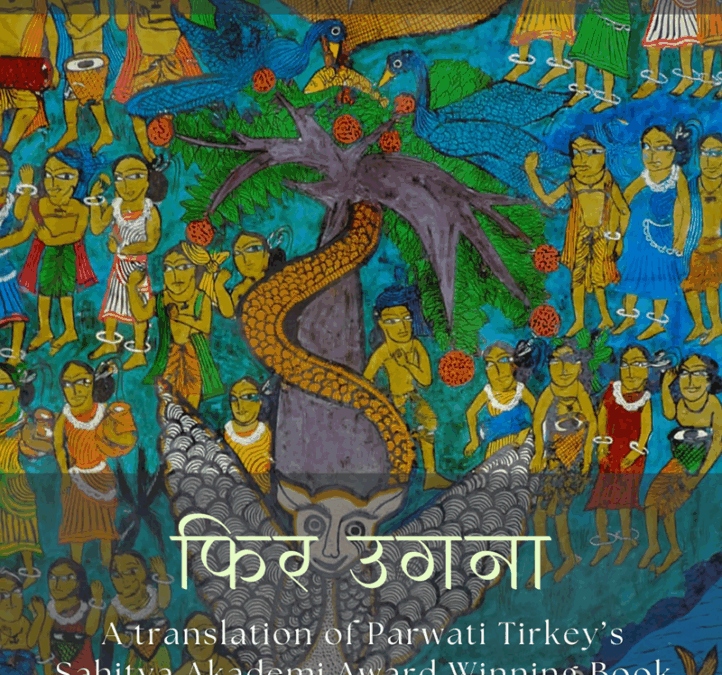
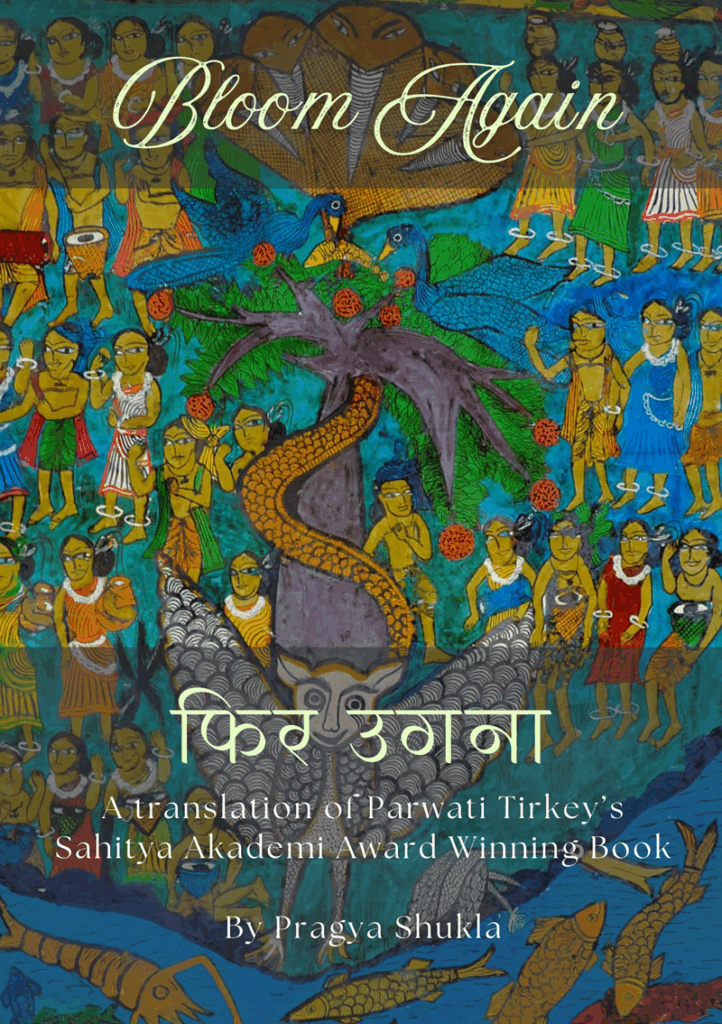
Bloom Again: A translation of Dr Parwati Tirkey’s Sahitya Akademi Award Winning Book by Dr Pragya Shukla
Bibliographic Details
- Publisher: Rupkatha Books (Imprint), Aesthetix Media Services (OPC) Private Limited; First edition (21 September 2025), under Rupkatha Translation Project 2025
- Language: English
- Ebook: 154 pages
- ISBN-13: 978-81-975130-9-1
- DOI: https://doi.org/10.21659/rtp02
- PDF Link: Free Access
- License: CCNC
- Dimensions: 17.6 cm x 25 cm
- Country of Origin: India
About the Book
True poetry leaves a permanent intellectual impact on the mind of a dedicated reader. This is true about the first collection of poems by Dr Parwati Tirkey, Phir Ugna (2023), published by Rajkamal Prakashan, which has earned her the Sahitya Akademi Yuva Puraskar 2025. She has emerged as one of the evocative poetic voices in Hindi from the Indigenous communities of Jharkhand. Born on 16 January 1994 in Gumla district, Jharkhand, Parvati Tirkey received early education at Jawahar Navodaya Vidyalaya, Gumla. She pursued graduation and post-graduation in Hindi literature at Banaras Hindu University, Varanasi, where she later earned a PhD from the Hindi Department on the topic “Kudukh Adivasi Songs: Life Raga and Life Struggle in Hindi.” During her time at Banaras Hindu University (BHU), she remained deeply connected to her tribal culture, supported by peers who upheld their traditions, while observing some of them becoming detached from their roots. She ascribes this disconnection to several reasons: the urban upbringing, the erosion of village structures, and the lack of access to Indigenous knowledge systems. So, she saw many being swept into a competitive societal race without ever experiencing the depth of tribal life. Her university years, however, deepened her connection to village life and her tribal identity. She described village life as embodying love, warmth, empathy, and a sense of egalitarianism that stood in contrast to hierarchical norms. For Tirkey, literature was deeply ingrained in her family and the tribal community: her parents have always been deeply connected to their communal literary traditions, where ancestral literature is preserved through performance.
Tirkey’s collection draws inspiration from the rhythms of the forest, the sounds of birds and rivers, the wisdom of ancestors, and a living cosmology. Writing in a voice that is both intimate and expansive, her poetry invites readers to witness the sacred in everyday affairs and to renegotiate relationships with the land, its members, and the invisible threads of heritage. What sets Tirkey apart is her ability to translate Indigenous cosmology into contemporary poetic form without losing its spirit. She builds her art on a vision that explores contemporary times through the lens of ecological crisis and cultural amnesia.
Translating such a textured and spiritually resonant body of work is no small feat, and Dr Pragya Shukla has undertaken this task with both reverence and rigour. For Dr Shukla, the act of translation as a linguistic endeavour becomes a voyage into the core of an Indigenous worldview. She exerted every effort to maintain the original rhythm and breath of the poems so that readers might feel the heartbeat of the land, hear the voices of its people, and experience the sacred textures of a culture that is often overlooked yet profoundly alive.
Dr Pragya Shukla is an Assistant Professor in the Department of English Studies at the Central University of Jharkhand. Her areas of interest include Gender Studies and Tribal Literature. Her doctoral thesis focused on “A Comparative Study of the Fictional Works of Githa Hariharan and Shashi Deshpande.” In addition to research papers, she is also involved in translation and writing poetry and short stories. Email: pragya.shukla@cuj.ac.in
by Editor | Mar 28, 2025 | Expired Call, Urban Imaginaries and Indian Cities in Literature
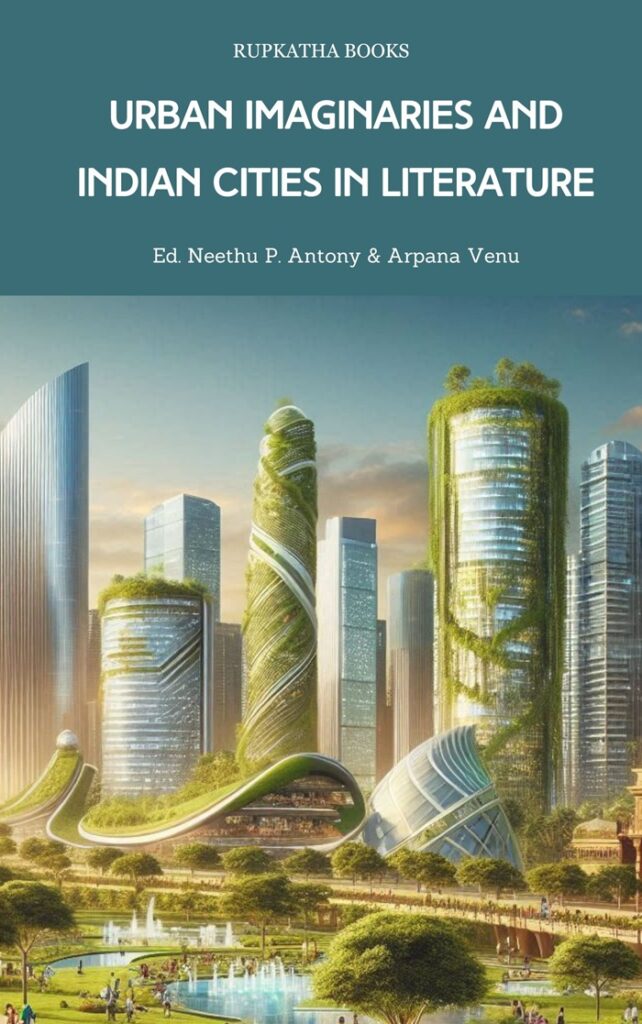
Call for Book Chapters
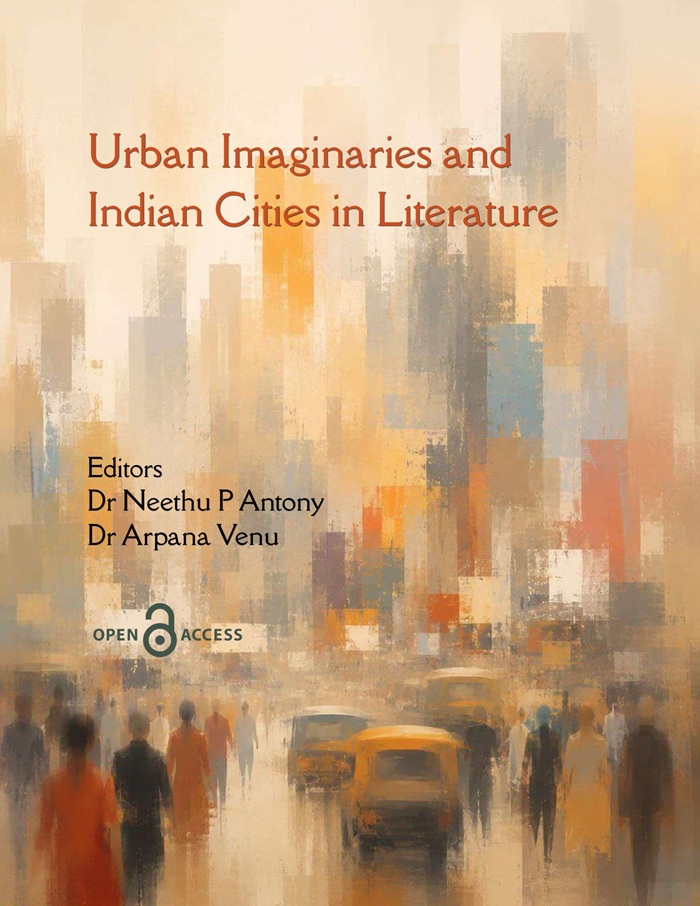
Urban Imaginaries and Indian Cities in Literature
Editors
Dr. Neethu P. Antony, VIT-AP University, Andhra Pradesh, India
Dr. Arpana Venu, VIT-AP University, Andhra Pradesh, India
The Theme:
In his book The Modern American Novel (1983), British author Malcolm Bradbury observes that, “…there has always been a close association between literature and cities. There are the essential literary institutions…There, too, are the intensities of cultural friction and influences/ and the frontiers of experience” (Bradbury, 1983). Over the past few years, the concept of urban spaces has emerged as a topic of discussion that piques the curiosity and interest of modern thinkers and scholars, as the study of space is intrinsically linked to postcolonial and cultural research in literature. Today, many urban realities are reflected in diverse forms of literary writing. Indian cities have historically been dynamic and multifaceted spaces, shaping and being shaped by literature.
Space theory plays a crucial role in the study of cities. French philosopher Michel de Certeau, in his essay “Walking in the City”, in The Practice of Everyday Life (1984), defines the city as providing‟ a way of conceiving and constructing space based on a finite number of stable, isolatable, and interconnected properties” (Certeau, 2011). He contends that literature depicts the lived realities of city dwellers and their deeds of resistance. He asserts that the city is a text produced by the authority, but that those who stroll across it read and rewrite it, distinguishing between the planned, structured city (strategies) and the ways people navigate and disrupt it (tactics) (Certeau, 2011). His insights on spatial patterns are consistent with how literature represents daily urban realities, particularly in informal settlements and marginalized spaces.
Building on this, the well-known French Marxist theorist and urban sociologist Henri Lefebvre’s concept of space as socially shaped provides a compelling framework for examining literary portrayals of Indian cities. In The Production of Space (1974), Lefebvre asserts that “space is not a scientific object removed from ideology and politics; it has always been political and strategic” (Lefebvre, 1989). This perception challenges the notion that urban landscapes are neutral backdrops, instead positioning them as contested terrains shaped by power, economy, and lived experiences. Literature, in turn, has long reflected these dynamics, captured the transforming landscapes of Indian cities and foregrounded the contradictions between tradition and modernity, colonial histories and postcolonial actualities, as well as globalisation and indigenous cultures.
At the same time, Edward Soja’s concept of “Third space” emphasises how literature not only reflects cities but also reinvents them as spaces of resistance, transformation, and aspiration. Soja asserted that the “third space” is a realm of extreme openness and resistance, in which novel implications and identities emerge. He believed it as “a place of critical exchange where geographical imagination can be expanded to encompass a multiplicity of perspectives” (Soja, 1996). This viewpoint is particularly significant for the study of speculative literature, which reimagines Indian cityscapes in futuristic contexts, as well as narratives that challenge dominant urban realities from diverse perspectives. The proposed volume aims to examine literary depictions of Indian urban spaces, with a particular focus on how cities serve as sites of memory, identity, resistance, and transition.
The volume also seeks to explore narratives on urban living, spatial politics, migration, environmental concerns, gendered experiences, and socio-economic inequities. David Harvey’s criticism of neoliberal urbanisation and support for urban rights are vital to this discussion: “the freedom to make and remake our cities and ourselves is one of the most precious yet most neglected of our human rights” (Harvey, 2008). This stance is pertinent in literary examinations of urban relocation, economic disparity, and disputes over public spaces. Furthermore, Doreen Massey’s observations about the transient and interrelated aspects of space add to this theory. She argues that space is not a solid facade but a dynamic, fluid assemblage of relations: “space as the product of interrelations…space as the sphere of possibility of the existence of multiplicity…space as always under construction” (Massey, 2005). This concept underlines how literature creates urban identities and gendered spaces and proves that cities are not static but rather dynamic areas of negotiation in their conceptualisation.
This volume invites contributions that engage with a variety of literary genres, including fiction, poetry, drama, and hybrid forms, alongside interdisciplinary perspectives from urban studies, social geography, and media studies. Key questions include:
- How do authors illustrate urban marginalization and informal settlements?
- In what ways may literary cities serve as historical archives?
- How can urban narratives construct gendered spaces?
- How does speculative fiction reinvent Indian cityscapes in futuristic settings?
Thus, this volume seeks to provide critical insights into the ways Indian cities are conceived, contested and reimagined in literature.
Suggested Areas and Topics:
Urban Narratives and Cityscapes:
- Representations of colonial and postcolonial cities
- The city as a character in literature
- Urban nostalgia and memory in literary works
- Informal settlements, slums, and marginalized spaces
- Literary representations of migration and displacement
Spatial Politics and Gender in the City:
- Gendered spaces and women in urban narratives
- Queer geographies in Indian cities
- Public and private spheres in urban literature
- Spatial segregation and caste in the city
- The role of class in shaping urban experiences
The City and the Environment:
- Ecocritical readings of urban landscapes
- Narratives of environmental degradation and resilience
- Water crises, pollution, and climate change in urban spaces
- Sustainable urban futures in speculative fiction
Popular Culture and Literary Cities:
- The portrayal of cities in cinema and digital media
- Crime fiction and noir aesthetics in urban storytelling
- Street culture, performance, and oral traditions
- Translation and multilingual voices in urban literature
Future Visions and Speculative Cities:
- Utopian and dystopian cityscapes in Indian fiction
- Cyberpunk and techno-urban imaginaries
- Science fiction and futuristic urban landscapes
- Reimagining Indian cities in graphic novels and visual narratives
Timeline:
- Abstract Submission Deadline: 30 April 2025
- Notification of Acceptance: 15 May 2025
- Full Paper Submission Deadline: 30 June 2025
- Peer Review Feedback: 30 July 2025
- Final Submission: 30 August 2025
- Word Limit: 5000-7000 words (including references)
Submission Guidelines:
- Abstracts (300-500 words) along with a short bio (150 words) should be sent to urbanimaginaries.rupkatha@gmail.com
- Full papers should be between 5,000-7,000 words (including references).
- Stylesheet: APA 7th edition.
- For Book Chapter Publishing Charge>>
About the Editors:
Dr. Neethu P. Antony is an Assistant Professor of English at the School of Social Sciences and Humanities (VISH), VIT-AP University, Andhra Pradesh, India. She holds a Ph.D. in English Literature from Mahatma Gandhi University, Kerala, with a specialisation in Gender, Performance, and Theatre Studies. Her research explores theatre and drama, subaltern resistance, trauma theory, gender and performance studies, urban space theory, and communication studies. She has published extensively on voice studies, Indian theatre modernity, ekphrastic literature, gender fluidity, and urbanism, and has presented her work at numerous national and international conferences. Email: neethuantony24@gmail.com
Dr. Arpana Venu is an Assistant Professor of English at the School of Humanities and Social Sciences, VIT-AP University, Andhra Pradesh. She holds a doctoral degree from Amrita Vishwa Vidyapeetham, with a focus on intra-Asian travel writing. Her research interests include travel writing, South Asian studies, urban studies, bhasha literature, and film studies. She has presented her research at various national and international conferences. Additionally, she is interested in translation, Indian classical music and engaging in interdisciplinary collaborative research. Email: venu.arpana@gmail.com
References
Bradbury, M. (1983). The Modern American Novel. United Kingdom: Oxford University Press: 96.
Certeau, M. D. and Rendall, S. F. (2011). “Walking in the City.” The Practice of Everyday Life. United Kingdom, University of California Press: 93-94.
Harvey, D. (2008). “The Right to the City.” New Left Review, 53: 23–40.
Lefebvre, H. (1991). The Production of Space. Bulgaria: Wiley: 80.
Massey, D. B. (2005). For Space. United Kingdom: SAGE Publications: 9.
Soja, E. W. (1996). Third space: Journeys to Los Angeles and Other Real-and-Imagined Places. United Kingdom: Wiley: 5.