feminism - Page 2

Black Feminist Discourse of Power in For Colored Girls Who Have Considered Suicide

1.1K views

Lamia Khalil Hammad, Yarmouk University, Jordan

Download PDF Version

Abstract

This paper discusses black feminist discourse of power in Ntozake Shange’s choreopoem For Colored Girls Who have considered Suicide When the Rainbow is Enuf. The work depicts the struggle of black women through a rainbow of experiences. At the end, the girls arrive at ‘selfhood’ by finding God in themselves. This paper focuses on how the patriarchal discourse lead to their suffereing and how they were able to claim back their identities as black females who only need to be loved and appreciated. Keep Reading

A Feminist Aesthetics of Nature

1.4K views

Tegan Zimmerman, University of Alberta, Edmonton, Alberta, Canada

 Download PDF Version

Abstract

This article examines the relatively unstudied field of the aesthetics of nature from a feminist perspective. Currently a feminist aesthetics of nature does not exist in scholarship, though I argue in our age of eco-crisis this is necessary. I explore what this feminist approach might entail by discussing three essential elements to the current masculinist study of nature: 1) the role of the subject or observer, 2) method of appreciation, and 3) appropriate object for appreciation. By focusing on the recent impasse in feminism, between essentialism and non-essentialism, this paper looks at how each side of the debate would approach these above three topics, and what future paths feminism might take in creating an adequate study of the aesthetics of nature.  Keep Reading

Semiotic Encryption of Women, Violence and Hysteria in Indian Women Dramaturgy

2.7K views

Praggnaparamita Biswas,  Banaras Hindu University, India

Download PDF Version

Abstract

The juxtaposing depiction of women, violence and hysteria as semiotic elements in women-centric play-texts attempts to translate the theatrical meanings because of its demonstrable approach to unearth the textual meanings and its relational politics of representation. From semiological aspect, the interplay of women, violence and hysteria generates a kind of semiotic femaleness in order to prognosticate the feminist route of cultural politics imbedded in the narratives of female composed drama. The present paper intends to analyze the semiotic transformation of Indian women dramaturgy in the plays of Padmanabhan, Mehta and Sengupta. Each of their plays tries to interpret new meanings hidden under the semiotic signs used by these playwrights and also attempt to project the gender politics visualized in the realm of feminist theatre.   Keep Reading

The “Politically Correct Memsahib”: Performing Englishness in Select Anglo-Indian Advice Manuals

3.3K views

S. Vimala, M.G.R. College, Hosur, India

Download PDF Version

Abstract

Examining select Anglo-Indian advice manuals written after the Indian Mutiny in 1857and during the ‘high imperialism’ period of the British Raj, the essay proposes that this cultural artefact served the purpose of constructing and naturalizing the English Memsahibs’ gendered racial identity. By reiterating the performance of gender, class and race imperatives to construct a unique identity prerequisite for the Anglo-Indian community as well as the Indian colony, these texts aimed at the crystallization of this identity that will strengthen the idea of the British Raj. Such reiteration- apart from revealing the imperial anxiety of the subversion of the Memsahib identity- were useful to caution the English women new to the colonial environment.  Reading these Anglo-Indian advice manuals produced for the consumption of the Anglo-Indian community, what the essay further proposes is that the performance of gendered-racial identity of the English women in India constituted not only the governance of their bodies and the Anglo-Indian spaces, but also their management of travel and material consumption including food.  Judith Butler’s Gender Trouble and Bodies That Matter provide useful insights to study the performance of the “politically correct Memsahib” identity and its attendant relation to the imagining of the homogenous British Raj.    Keep Reading

Three Book Reviews

496 views

The Performance Identities of Lady Gaga: Critical Essays

The Performance Identities of Lady Gaga: Critical Essays

Edited by Richard J Gray, Jefferson, NC: Mcfarland, 2012, ISBN: 978-0-7864-6830-0

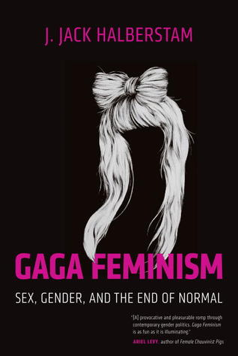
Gaga Feminism: Sex, Gender and the End of Normal

Gaga Feminism: Sex, Gender and the End of Normal

By J. Jack Halberstam, Boston, MA: Beacon Press, 2012, ISBN: 978-0-8070-1098-3

Pray the Gay Away: The Extraordinary Lives of Bible Belt Gays

Pray the Gay Away: The Extraordinary Lives of Bible Belt Gays

By Bernadette Barton, New York: New York University Press, 2012, ISBN: 978-0-8147-8637-6

Review by Rohit K Dasgupta, University of the Arts London Keep Reading

In ‘prison-house of love’[i]: The Bad Girl and bad girls of Mario Vargas Llosa

4.4K views

Tajuddin Ahmed

Netaji Subhas Ashram Mahavidyalaya, India

Volume 2, Number 3, 2010Download PDF Version

DOI: 10.21659/rupkatha.v2n3.09

Abstract

Mario Vargas Llosa’s recent novel The Bad Girl centers around a sexually liberated woman who is in search of individual emancipation through transgressions of all social norms. The issue of female sexuality and its relation with woman liberation occupies an important and debatable position in Feminist discourse. Llosa’s own attitude to liberated female sexuality had been an ambivalent one. In this paper I would like analyse and explore the question of woman’s liberation in the novel of Mario Vargas Llosa, taking into account the major conflicting Feminist discourses as well as the presence and erasure of female sexuality in the history of Latin American novels.  Keep Reading

Border Identity Politics: The New Mestiza in Borderlands

878 views

Lamia Khalil Hammad

Yarmouk University, Irbid-Jordan

Volume 2, Number 3, 2010Download PDF Version

DOI: 10.21659/rupkatha.v2n3.08

Abstract

This paper investigates Anzaldua’s Borderlands, first, for its radical theory of the mestiza consciousness and how it would establish the border identity for the Chicana/o people.Anzaldua’s Borderlands exemplifies the articulation between the contemporary awareness that ‘all’ identity is constructed across difference and argues for the necessity of a new politics of difference to accompany this new sense of self.  Borderlands maps a sense of the plurality of self, which Anzaldua calls mestiza or border consciousness. This consciousness emerges from a subjectivity structured by multiple determinants—gender, class, sexuality—in competing cultures and racial identities.    Keep Reading

Performing and Dying in the name of World Peace: From Metaphor to Real Life in Feminist Performance

1K views

 Ahu Antmen

Marmara University, Istanbul, Turkey

Volume 2, Number 1, 2010 I Download PDF Version

 DOI: 10.21659/rupkatha.v2n1.07

Abstract

The paper presents an analysis of “Brides on Tour” undertaken by the Italian performance artists Pippa Bacca and Silvia Moro on International Women’s Day (8th March) in 2008  and considers it as much as a symbolic act of sacrifice, performing for global politics as potent subject and woman as victimized object of local ‘petty crime’.  A very important aspect of the performance is the way it blurs certain boundaries, as with feminist activity in general. In the performance, the writer detects a sense of solidarity by women for women on a global level, where the sacrifice reflected in the risk-taking aspect of hitchhiking symbolizes the past efforts of feminist activists who have at times put their lives in danger to better the living conditions of women through the ages and across nations. Keep Reading

Aesthetics of Indian Feminist Theatre

1K views

Anita Singh, Banaras Hindu University, Uttar Pradesh, India

Abstract

This study addresses a number of Indian feminist plays (both by men and women) that were written and performed in the last century and early years in this century. The paper focus specifically on Indian theatre because of its long established theatre tradition that goes back to 1st century B.C. Ironically in such a country there were hardly any women dramatist to speak of before 19th century. At the core, the belief of a Feminist theatre is in the efficacy of theatre as a tool for conscientization, for critiquing social disparities and for self exploration and expression. Feminist theatre is a source of empowerment; it enables women to speak out. It is at the intersection of art, activism and social relevance and sees theatre as an instrument of real change in women’s lives.  It is an exploration of women’s own unique idiom, their own form, their language and ways of communication. It is a challenge to the established notions of theatre. Keep Reading